Gwai Fa Go (Osmanthus Flower Jelly)
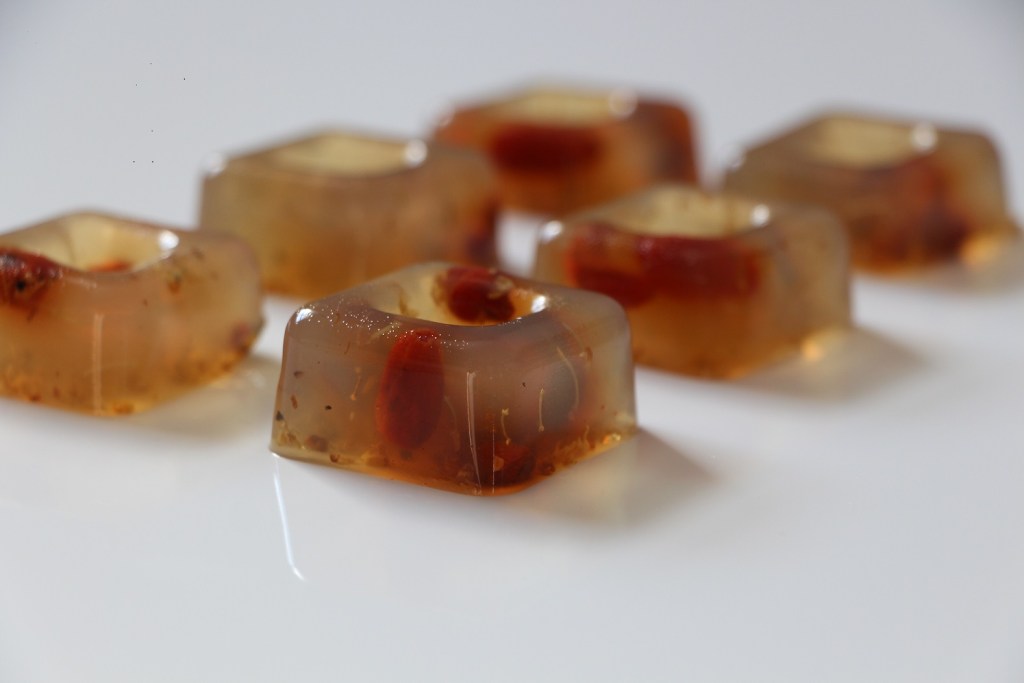
This is one of my favourite desserts at dim sum. We came across a recipe when we were researching snacks for Chinese New Year, so of course we had to try it! The first recipe we found used only agar to set the jelly. It held the liquid, but the texture had way too much crunch and not enough of a softer jelly feel. We decided we needed a mix of gelatine and agar — it turned out that finding the right proportions were a lot harder than we thought. After numerous trials, this is the recipe we settled on! We are pretty happy with it, but I guess it all comes down to personal taste. If you like a bit more crunch, then you can add a little agar and take out some of the gelatine mass. If you don’t like any crunch at all, you could try using only gelatine (though we’ve been strongly cautioned that is not authentic). For a little more firmness, you could reduce the amount of tea (or simply simmer for a bit longer to reduce the water content). There are so many variables! We had these cute little silicone moulds that I thought were perfect for bite-sized jellies, but a square pan works just as well! Once the jelly is set you can simply cut them to size.

Read More

Mango Ducky with Coconut Bubbles

I first saw the play on soap and bubbles as a dessert  by Andoni of Mugaritz. Inspired by this, for some time now I had been meaning to work on a rubber ducky and bubbles dessert. I finally got around to putting something together the other day. The resulting dish was nostalgic and playful — and it gave me the chance to try out a fun application of an aquarium air pump.

Read More

Mango Pate de Fruit

Mango Pate de Fruit (Recipe Adapted from Chef Migoya)

Ingredients

8.4g Pectin
160g Sugar (1)

200g Mango puree
320g Sugar (2)
200g Guava juice
20g lemon juice
85g Glucose powder

6.3g Citric Acid (l)

Instructions

1. Whisk together the pectin and sugar (1).
2. Place the pectin/sugar mixture in a pot and whisk in mango puree, guava juice and lemon juice.
3. Combine sugar (2) and glucose powder in separate bowl.
4. Bring mixture to a boil.
5. Add sugar/ glucose mixture and bring mixture to 107°C/255°F
6. Remove from heat and stir in citric acid.
7. Pour into a prepared frame of 9″ x 9″.
8. Let it set overnight.
9. Cut and toss in citric acid sugar mixture (1/2 cup sugar: 1 tsp citric acid).

Rum and Coke Mini Gummy Bears

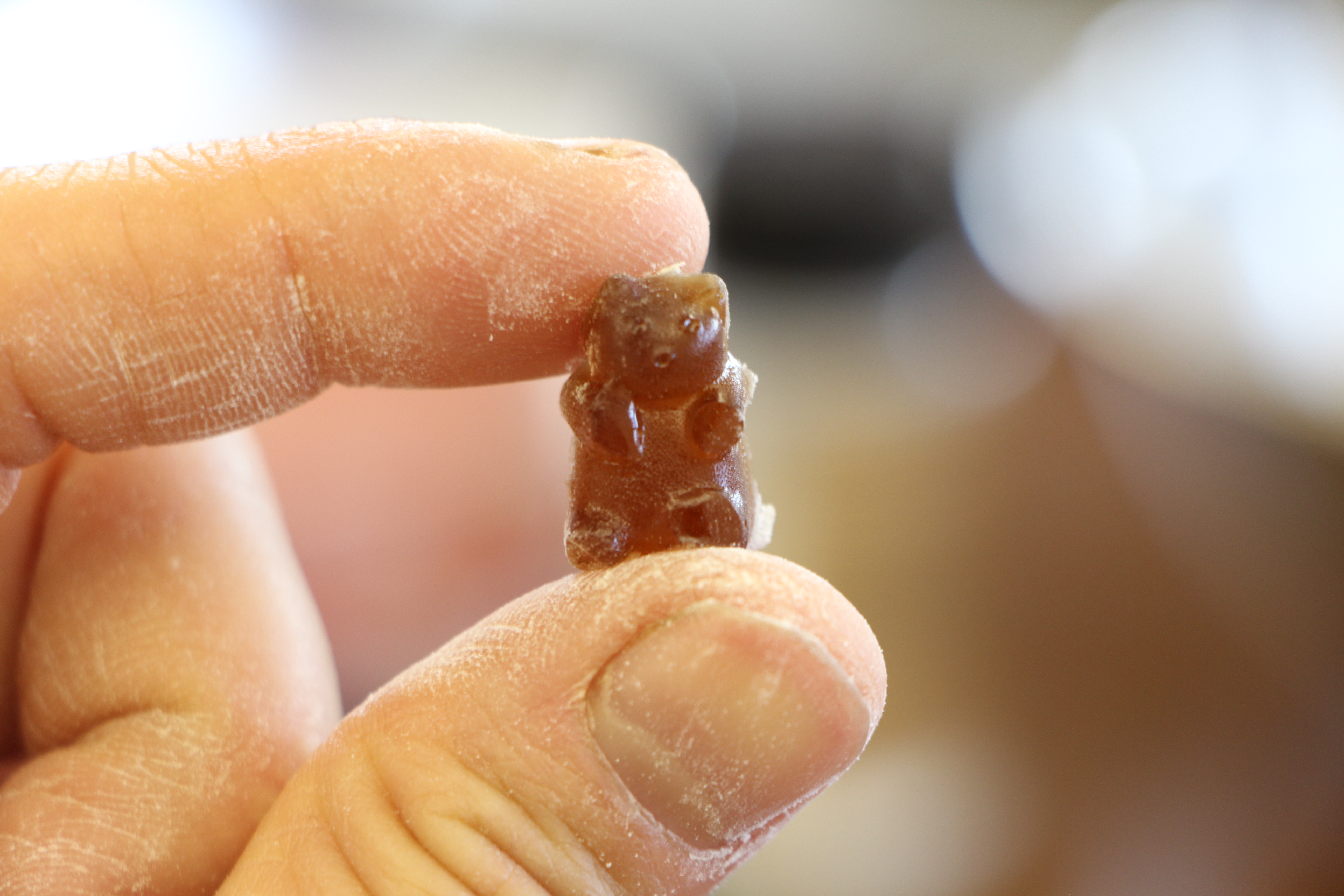
IMG_3412
Isn’t he cute?

A fun approach to this recipe would be to make two batches – one coke gummy mixture and one rum gummy mixture and pipe them into two separate layers for some nice colour/flavour contrast. This would work for other drinks as well…Moscow mule anyone? With enough planning, our next party may have a gummy bar. Read More

Panning 101 – Chocolate covered stuff

Honey cake balls covered in milk chocolate, dark chocolate and Matcha white chocolate for our friends’ (Lisa and Alex) wedding.

Panned Items or Dragees. Panned products or dragees are a type of confectionery that typically has some centre wrapped with chocolate, rounded, and often times finished with a hard candy shell. They have become increasingly popular in recent years. Pastry chefs around the world are tumbling anything and everything in chocolate. No longer will you be limited to chocolate-covered almonds, peanuts, and raisins that come in small packages called Glosettes. Nowadays, pastry chefs and chocolatiers are panning things like cereal, puffed grains, toffee, gummies with various flavour combinations and finishing them with different colours, creating a sophisticated version of the treat we all know and love. However, taking something that is done in the commercial world and trying to refine it, a few issues arise:

1) Public perception. Why would I pay $12/jar for chocolate covered raisins when I can buy Glosettes? Many consumers may not be aware of (or care about) the differences: 1) We use high-quality ingredients and sustainable chocolate. 2) We pan in smaller batches, not done autonomously with machines.

2) Time. There are limitations to the batch size since we are using small tabletop panners. For something small like coffee beans, it takes as long as 4 hours just to get it to the right size.

3) Money. Unless you’re buying hundreds of kilos, nuts and high-quality chocolate can be quite expensive.

4) Lack of knowledge. We are still missing some trade secrets to get the ultimate shine. It’s also sometimes preferable to avoid the use of commercial finishes like a shellac (made with crushed up beetles – not everyone’s cup of tea!).

5) Exposure to resources. Glazes and polish are sold by 18L pails with a relatively short shelf life. Since the amount required per batch is quite small, it doesn’t make sense to buy them since we’ll need to throw most of it out.

6) Co-packing. Outsourcing the production to a third party can help to resolve some of the above challenges, but this raises the question: is it artisan any more?

Read More