Desired Dough Temperature (DDT): The Basics

In many bread recipes, a target temperature, or DDT (Desired Dough Temperature) is often specified for the dough for the end of the mixing process. Is it important? Mixing the dough in a specific temperature range encourages proper gas production during fermentation, resulting in the ideal loaf volume for the final product. The DDT may be influenced by factors beyond the ambient temperature. For example, if the water is too cold, it might take longer for the bread to properly rise. On the other hand, if the water is too warm, it will accelerate the fermentation process. By taking DDT into consideration, we can eliminate some of these variables and will achieve more consistency in fermentation, final dough and timing.

What is Desired Dough Temperature (DDT)?
Desired dough temperature is the temperature that the dough should reach at the end of the mixing stage just before bulk fermentation. Read More
Preferments

Poolish, levain, biga, pâte fermentée – is there a difference? And what’s the point in preparing a part of the dough separately? In this post, I’ll try to clarify the terminology and the science behind the wonderful world of preferments.

What is a pre-ferment?
A preferment is a portion of dough that is mixed in advance of preparing the final dough. Its main purpose is to increase flavour, strength, and shelf life. Because it is mixed ahead of time, bulk fermentation as well as mixing time is reduced. Preferments can be stored either at room temperature or in the refrigerator overnight, those that are stored in the fridge often assume more of an acidic flavour profile while room temperature preferments have a lactic flavour. Read More

Baker’s Percentage

Baker’s Percentage refers to a standard measurement used in most professional kitchens for yeast-raised products. It refers to the ingredients’ ratio to the amount of flour by weight, where flour or the combination of different flours always add up to 100%.

For example if you have 20g of salt to 1 kg of flour, salt is 2% of the weight of the flour. (N.B. salt is usually between 1.5-2.5% of flour weight.)

Another example, if you have 600g of water to 1 kg of flour, water is 60% of the weight of the flour, we can say that the bread is of 60% hydration.

It’s important to note that the formula’s total percentage will not add up to 100%, only the weight of the flour would. Depending on the number of ingredients, each recipe will have a different total percentage. Say you have a recipe for a bread that has: 100% flour, 60% water, 2% salt and 2% yeast, you would have a total of 164%. Read More

Autolyse

Autolyse is French for autolysis, which refers to the cellular process of self digestion. In the world of bread however, it refers to a technique that was developed by Professor Raymond Calvel. You may see the term pop up in bread recipes every once in a while. It involves a slow and minimal mixing of flour and water for a short period of time followed by a resting period, before moving on to the rest of the bread-making process. In this short post I’ll try to provide you with a better understanding of what autolyse is, why we do it, and some of the different ways it can be done. Read More

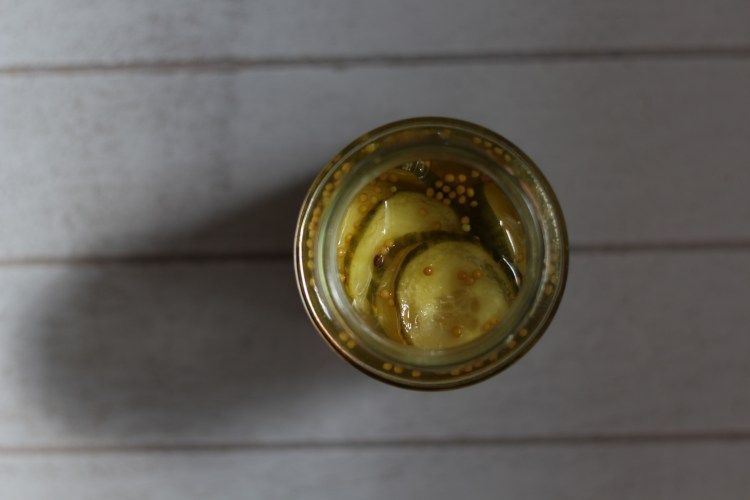
Bread and Butter Pickles

IMG_9025

Ingredient
1 3/4 cup vinegar (we used a combination of apple cider and white vinegar 50/50)
1 3/4 cup + 2 tbsp sugar
1 tbsp mustard seeds
1/8 tsp turmeric powder
1/2 tbsp celery seeds
3 tbsp salt Read More