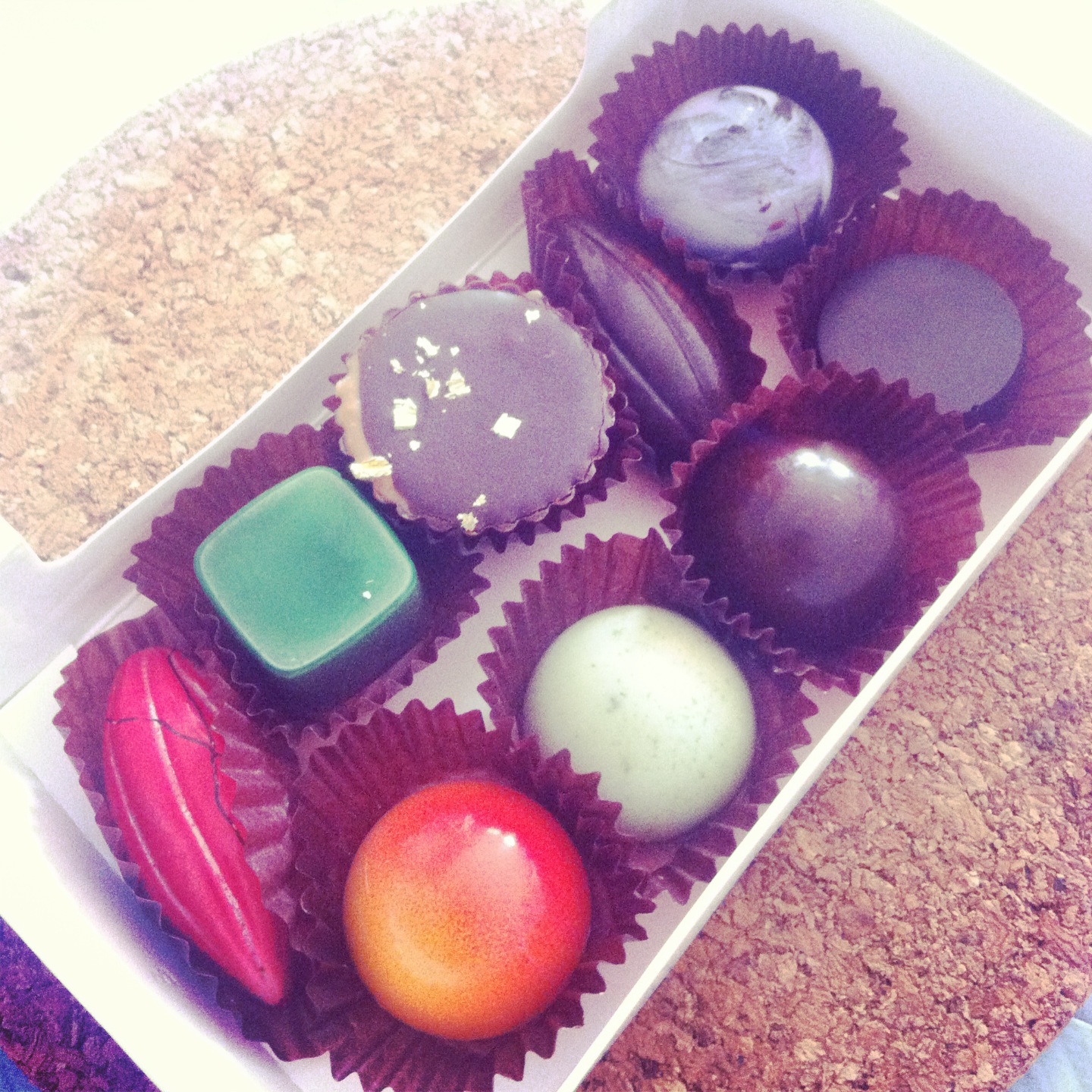
Mother’s Day Chocolates 2013

1st row from left to right: lychee, pistachio, peanut butter, coffee, lavender
2nd row from left to right: passion fruit, green tea, peach, mint 

Alinea: July 2012


Molecular Cuisine Workshop @Cedarlane: March 23, 2013

For those of you that don’t know John Placko, he is a well-trained chef that spent most of his time in the research and development department for various food corporations developing recipes. He has also competed at the Bocuse d’Or and dined at some of the best restaurants in the world, El Bulli, Mugaritz, El Celler de Roca, Noma, just to name a few.  His most recent job was being the director of culinary excellence at Maple Leaf Foods’ THINKFOOD before venturing off and opening his own Modern Culinary Academy. He was recently featured with his new line of ingredients on Global TV’s 16 x 9  show along with Nathan Myhrvold, the author of Modernist Cuisine.  
His passion now lies within molecular cuisine where his goal is to educate chefs, pastry chefs and foodies about the emerging trends of modernist cuisine. From carrageenan to xanthum gum, part of his job now is to run molecular workshops explaining what these ingredients do and how you can incorporate them onto plates.
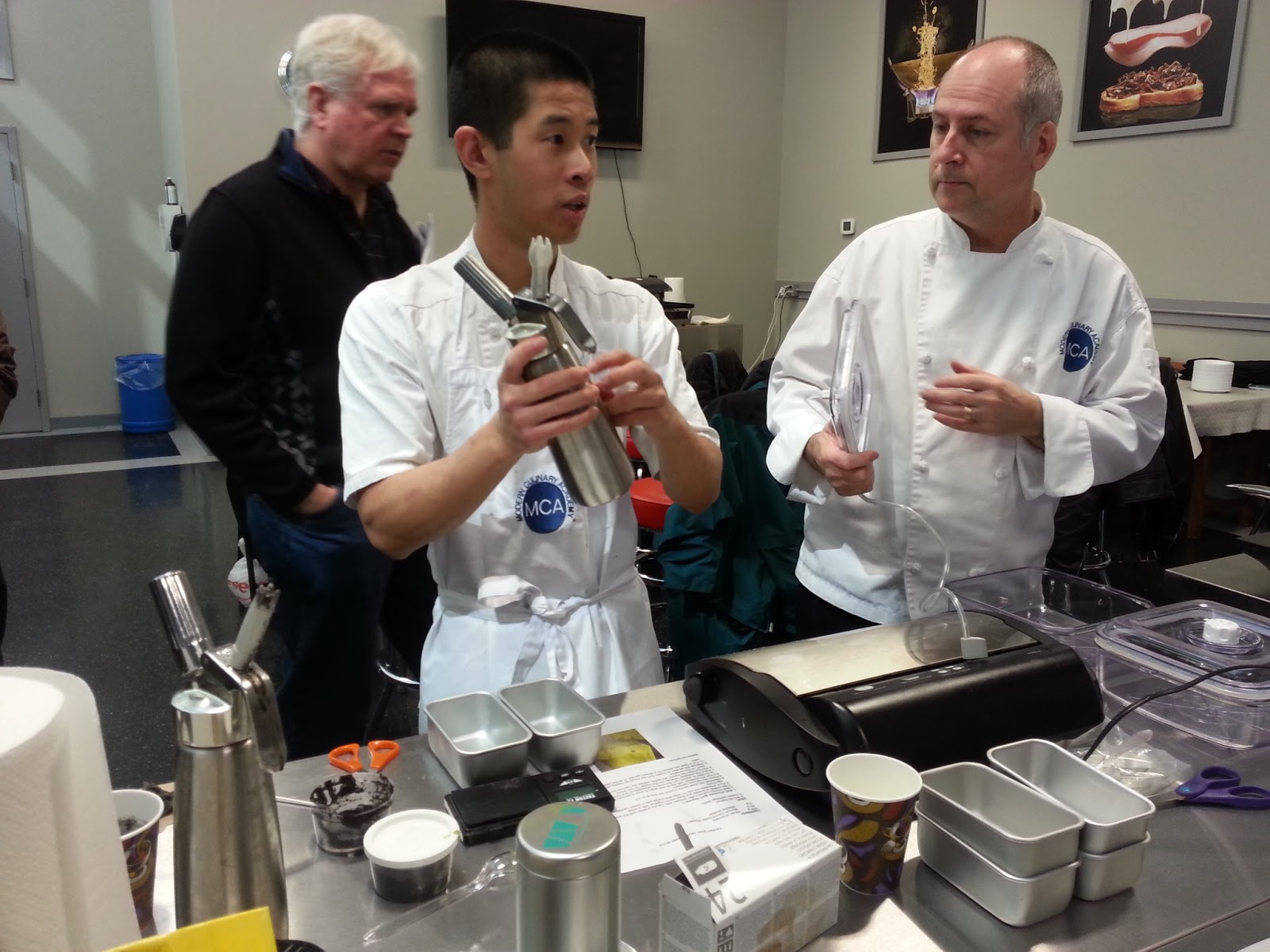
John going over the recipes with everyone
Royce making melon caviar

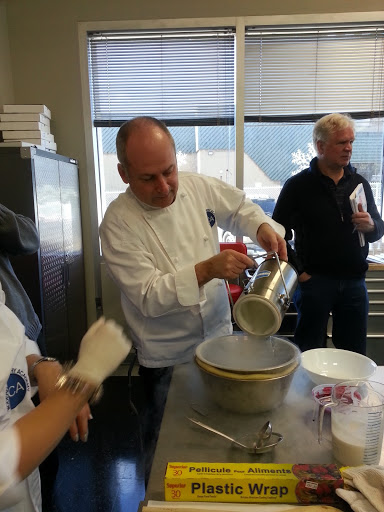
John and Judie demonstrating modern techniques to participants
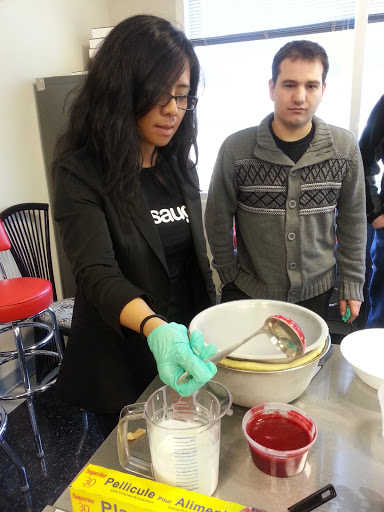
Michelle making the raspberry and coconut shells with liquid nitrogen

Michelle making white chocolate stones
Michelle making ice cream pearls with liquid nitrogen
John dispensing a sous vide meringue through a ISI siphon

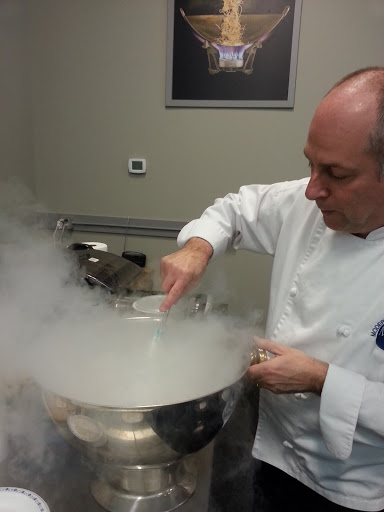
John Placko making ice cream with liquid nitrogen
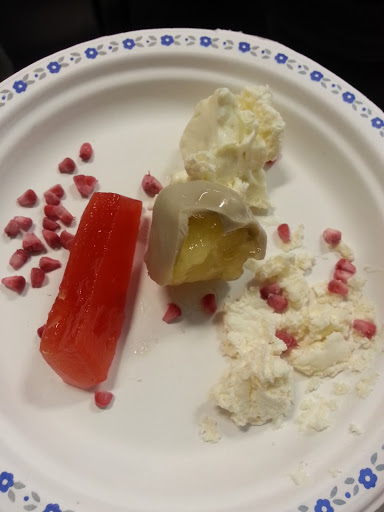
An offering of modern techniques (raspberry niblets, compressed watermelon, white chocolate and passion fruit stones, liquid nitrogen ice cream)
For a photo of John’s plating: http://t.co/XCRYLYwNnZ
John cutting yogurt sheets
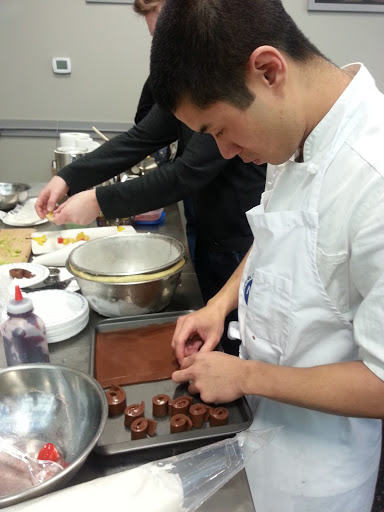
Royce cutting the pliable chocolate, and rolling them into chocolate scrolls.
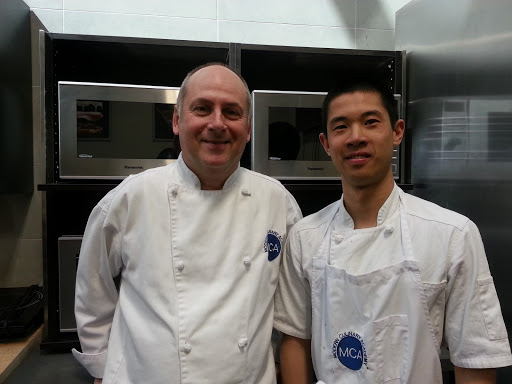
John Placko and  Royce Li posing for the camera
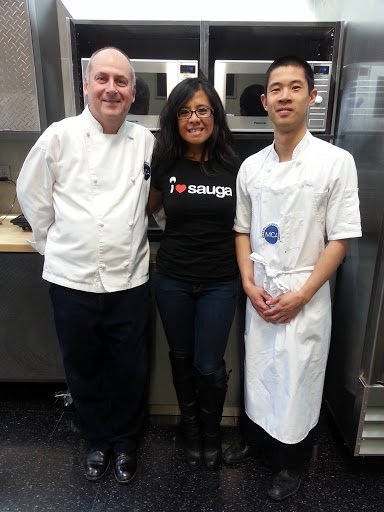
John Placko (MCA), Michelle Raqueno (Insauga), Royce Li (78 Degrees)
John just launched his new website, http://www.powderfortexture.com. You will be able to source hard-to-find modern culinary ingredients in convenient sizes by clicking on the link herePowder for Texture ingredients can also be found in retail at Nella Cucina, Nella Mississauga and Willow Cakes and Pastries.
For those of you that are interested in an hands-on experience, check out the upcoming workshops in your local area by visiting the Modern Culinary Academy calendar page here.

Aerated Green Tea Chocolate

250g of Zephyr melted at 45C
40g of Mycryo microwaved along with 5g of matcha powder
Green tea flavoured cocoa butter is mixed with white chocolate
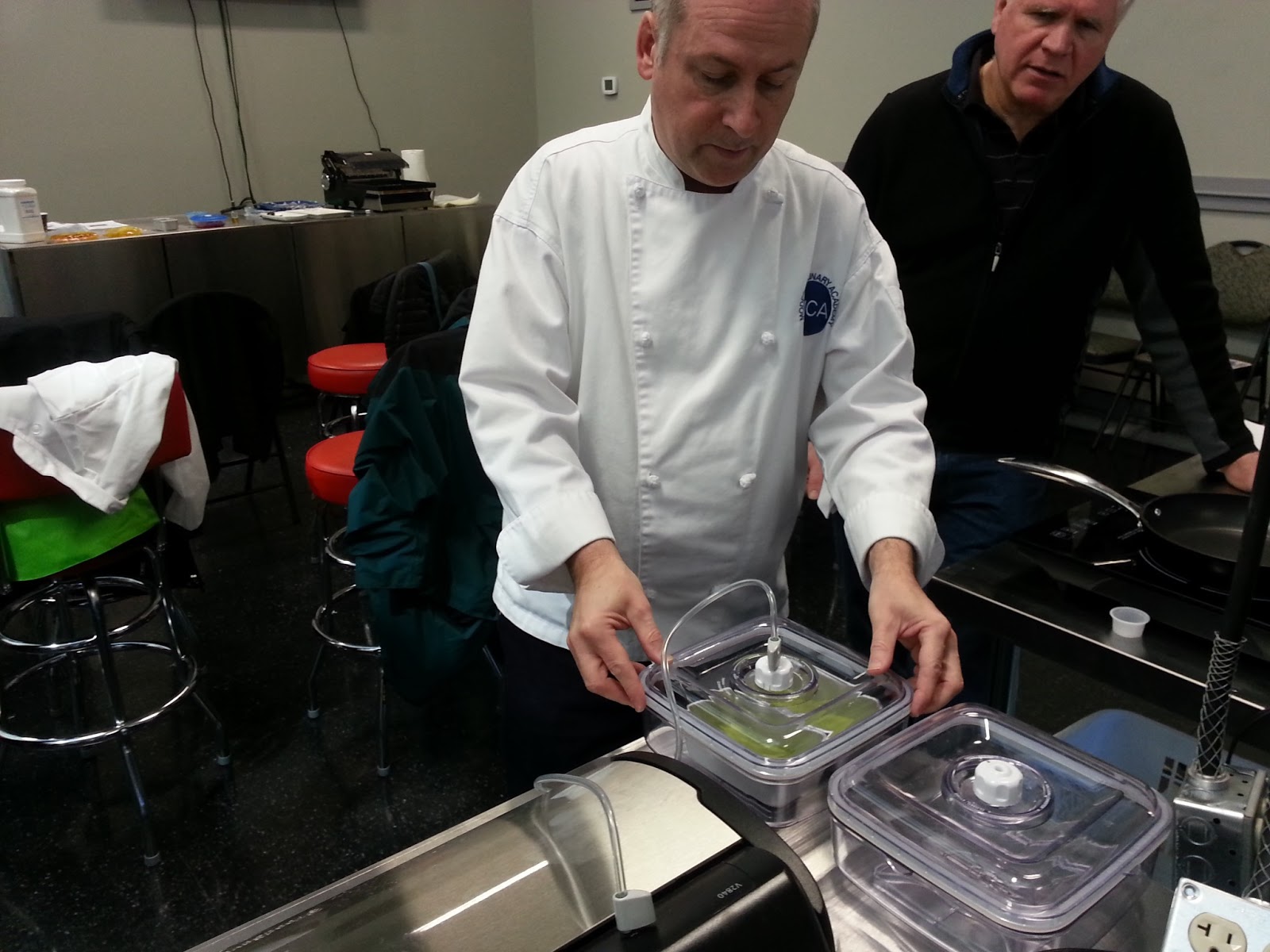
The mixture is poured in an ISI siphon, charged with 2 N20 cartridges
Mixture is dispensed into a rectangle shaped mould
It is vacuum sealed in the container until it doubles its volume. The terrine is then stored in the freezer until ready to use.
When you are ready, gently release the pressure by turning the knob to open. Release the aerated chocolate by dipping the mould in tepid water. Cut/ break into pieces and serve.
The Tree to Bar Experience

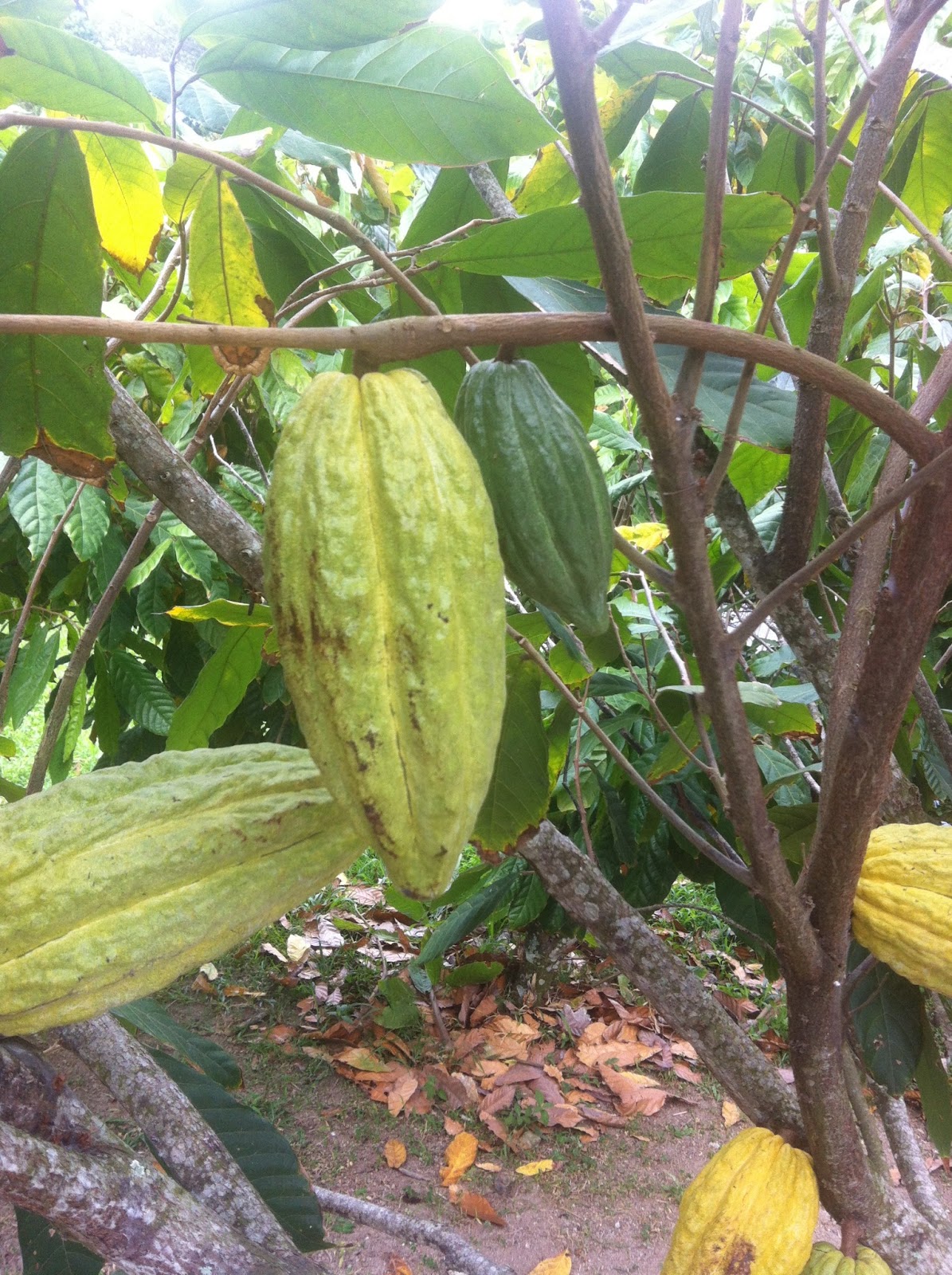
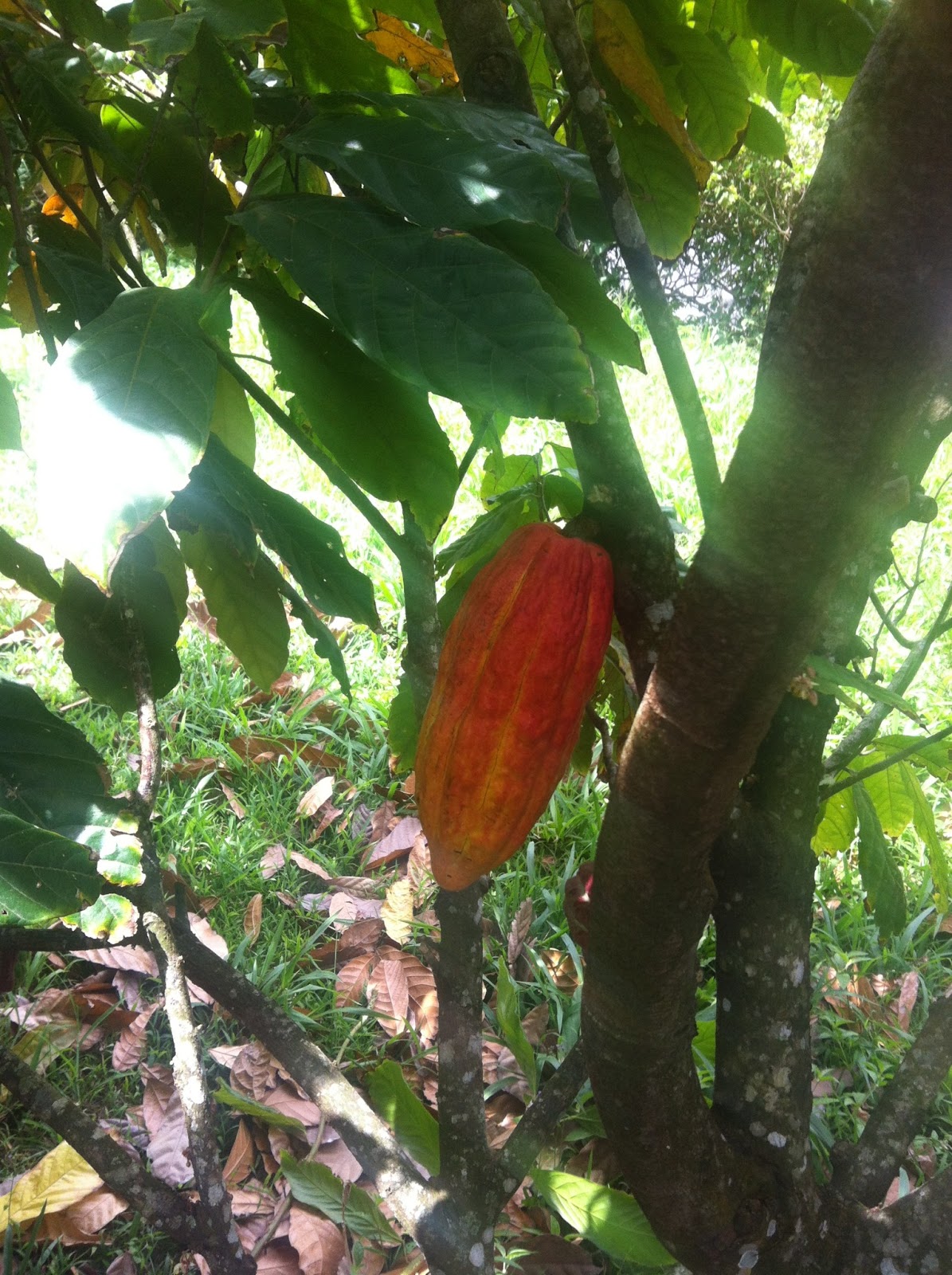
I know where chocolate comes from and the process by which the magical transformation of the cacao bean undergoes before hitting the shelves for the consumer. Still curious to see what the pod and tree look like in real life, I decided to go straight to the source and experience this unique opportunity of a “tree to bar” tour at the Rabot Estate in St. Lucia. 
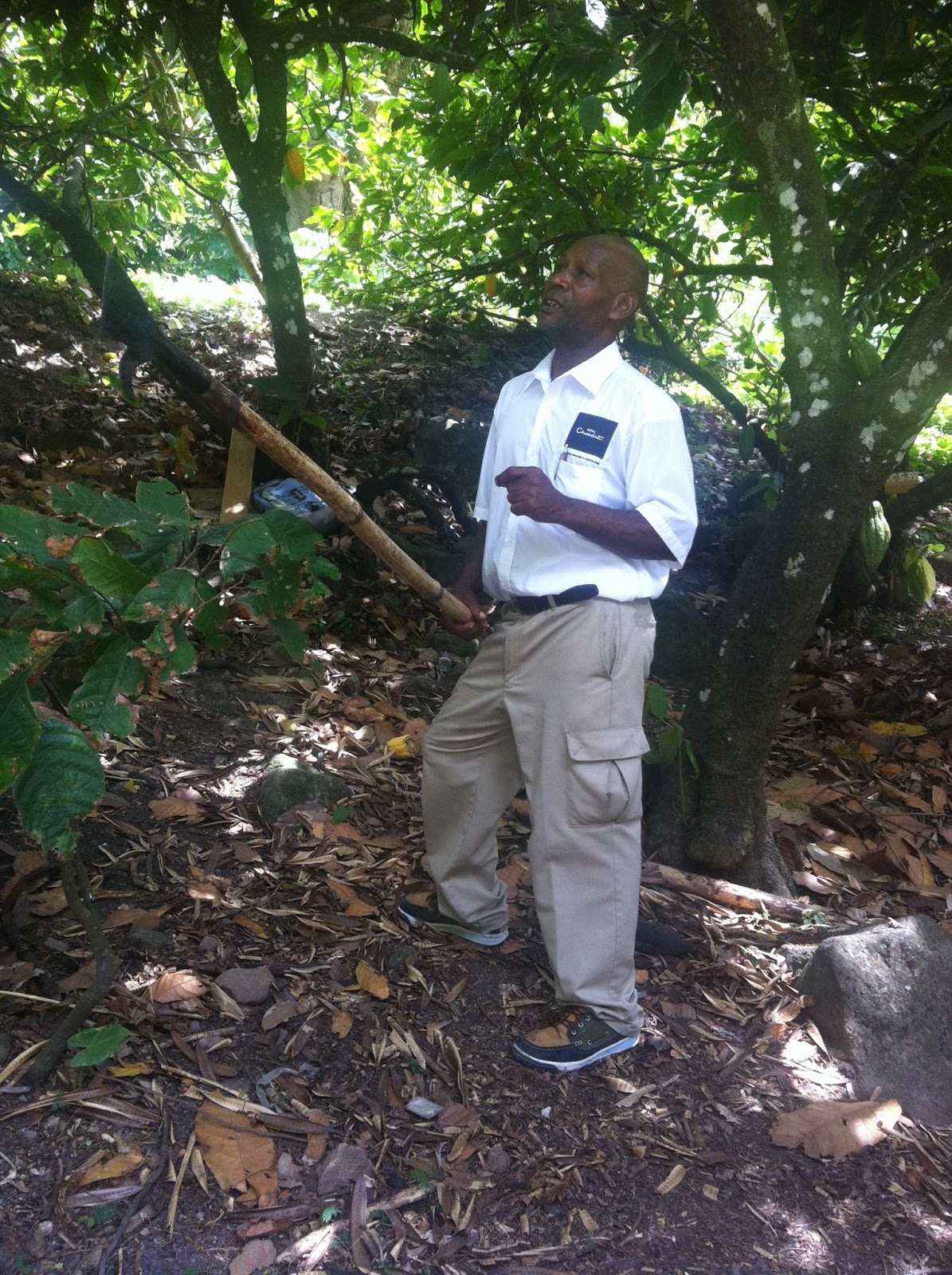
On the Rabot Estate, they grow a variety of cacao trees, fruit trees and orchids. In terms of cacao, they have created a gene bank and started crossing different species of cacao plants. Through research and development, they are able to plant species of cacao based on flavour, yields and the plant’s susceptibility to diseases, droughts, fungus, and pests.

The man in the picture on the left is responsible for almost all the cacao production in St. Lucia. 
He oversees the production and ensures the quality and standards are kept by educating farmers around the island. The man on the right is responsible for becoming a maitre chocolatier? … maybe one day.

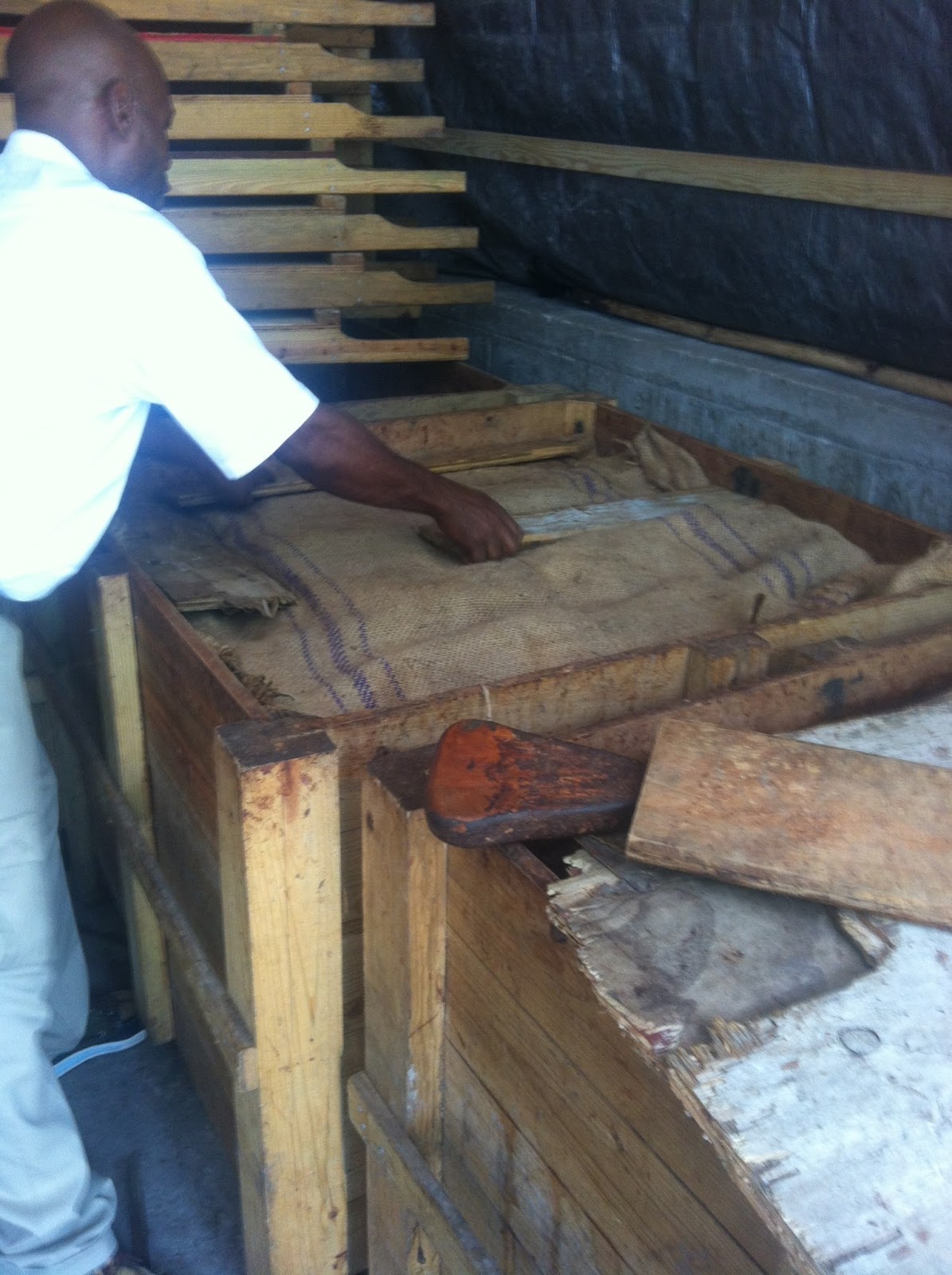
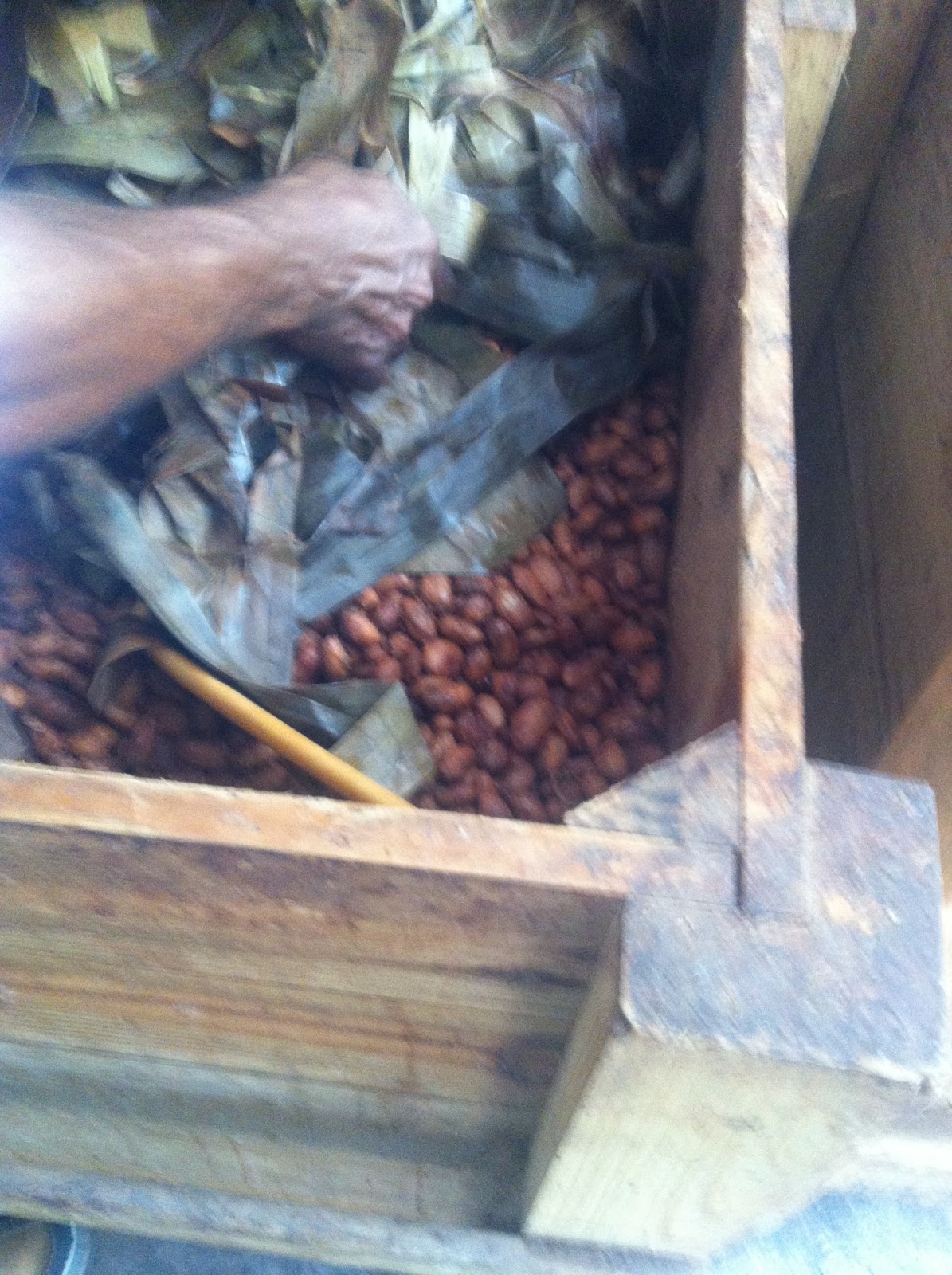
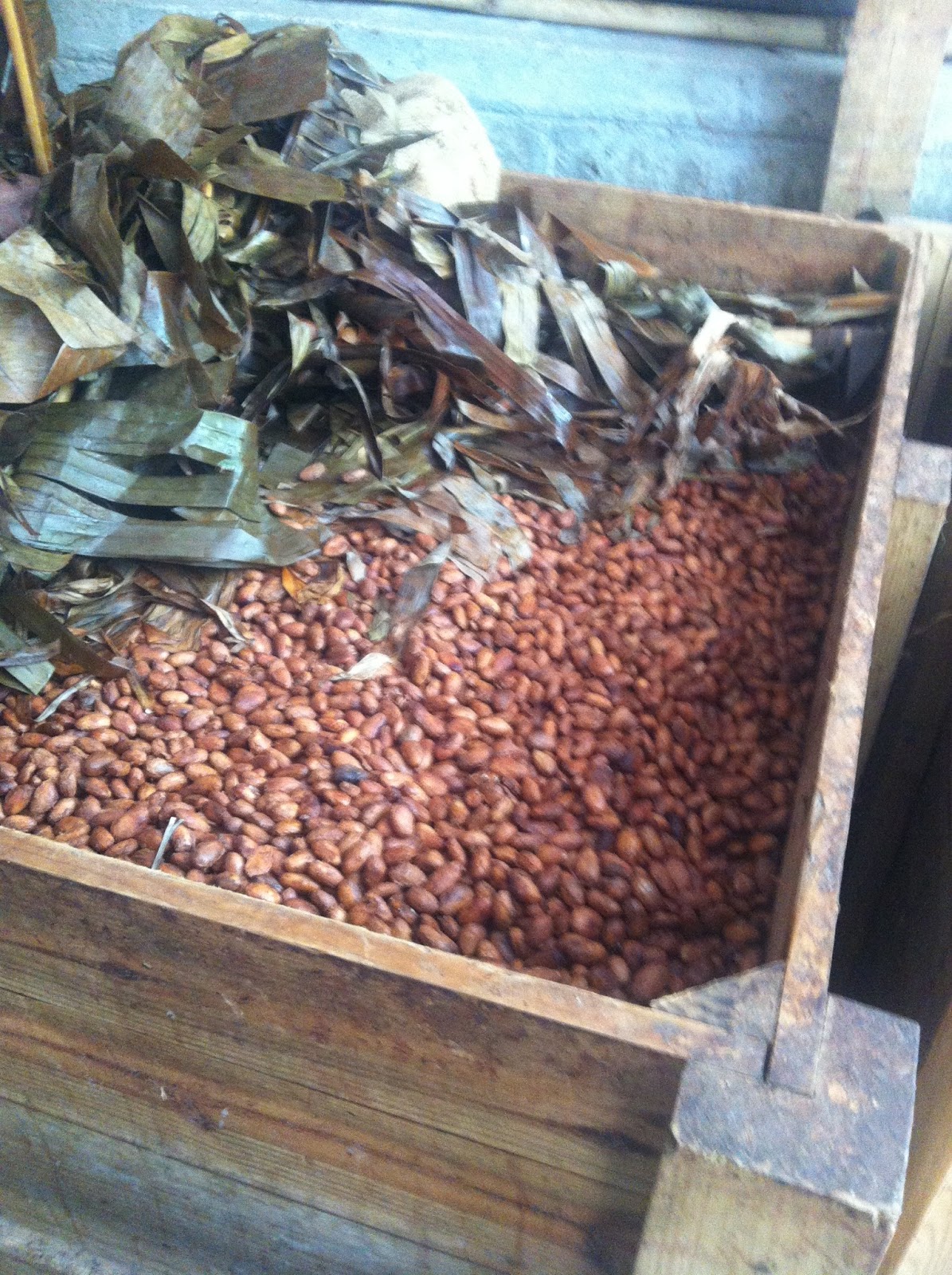
The beans along with its delicious lychee-like coating are put into a box to undergo fermentation for 5-7 days. The lychee-like substance, composed of mainly acid, sugar and vinegar help accelerate the process.

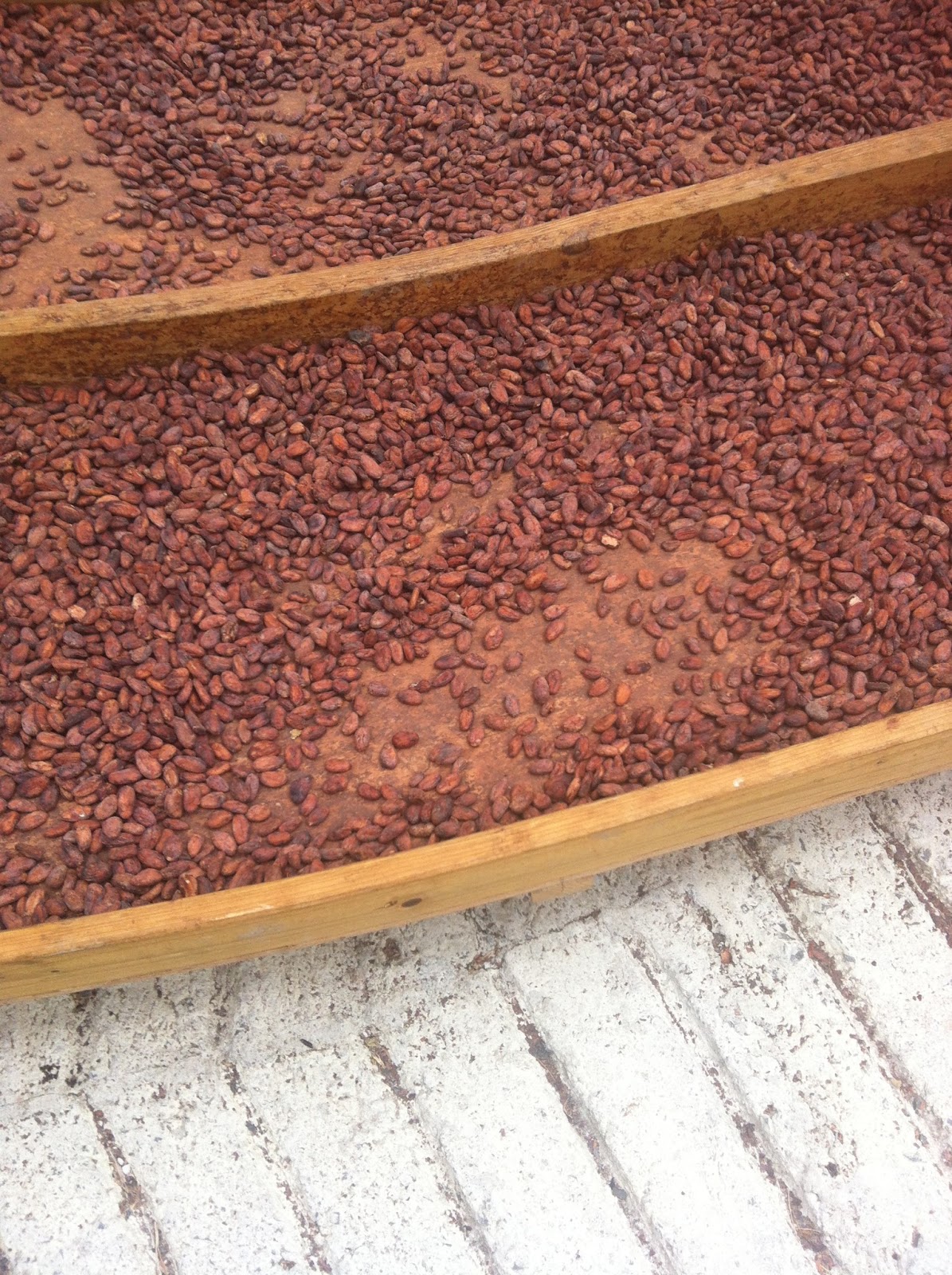
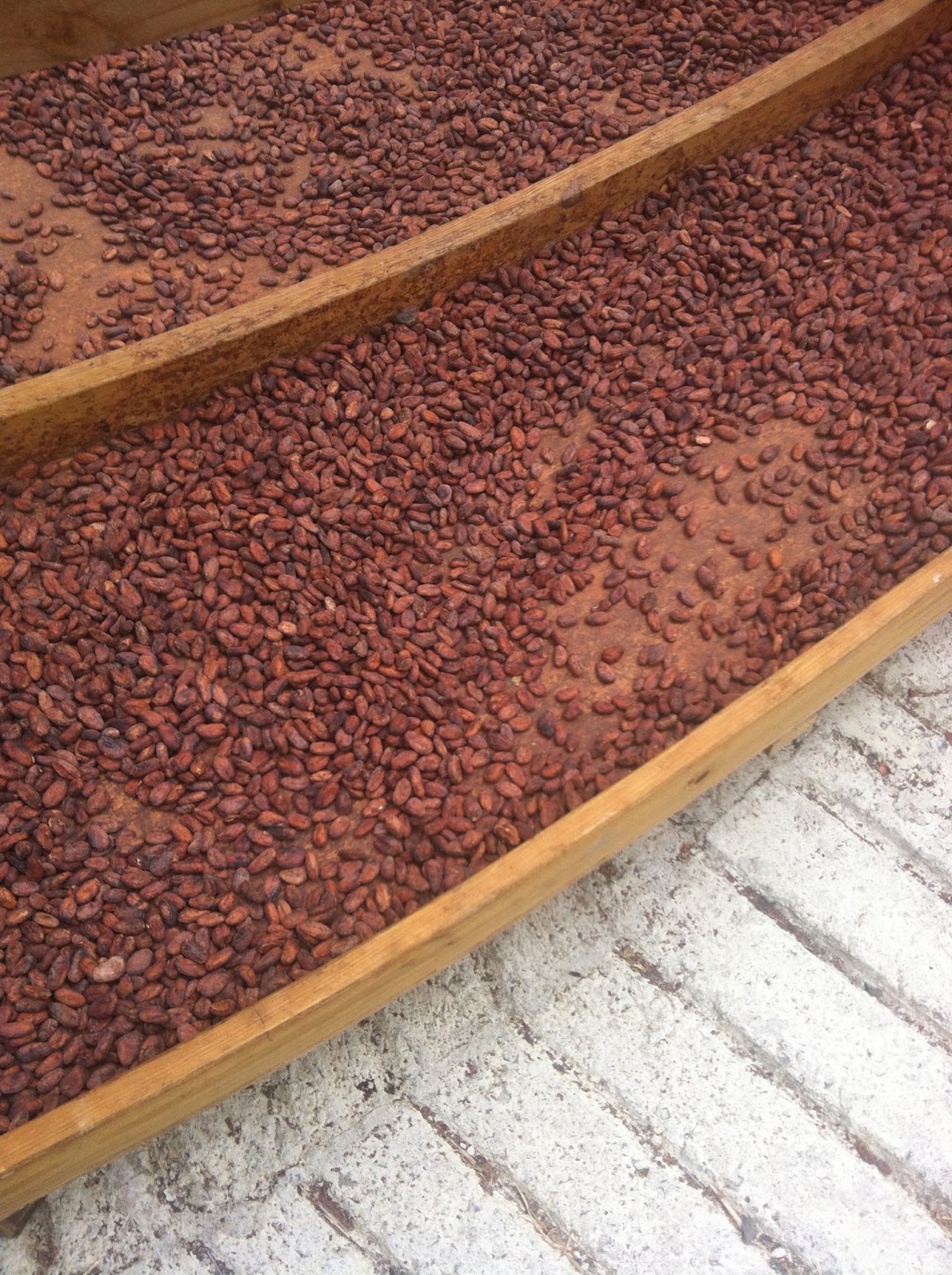
After the fermentation process, the bean is left out in the sun to dry. The bean is then roasted and shipped to Germany for processing.

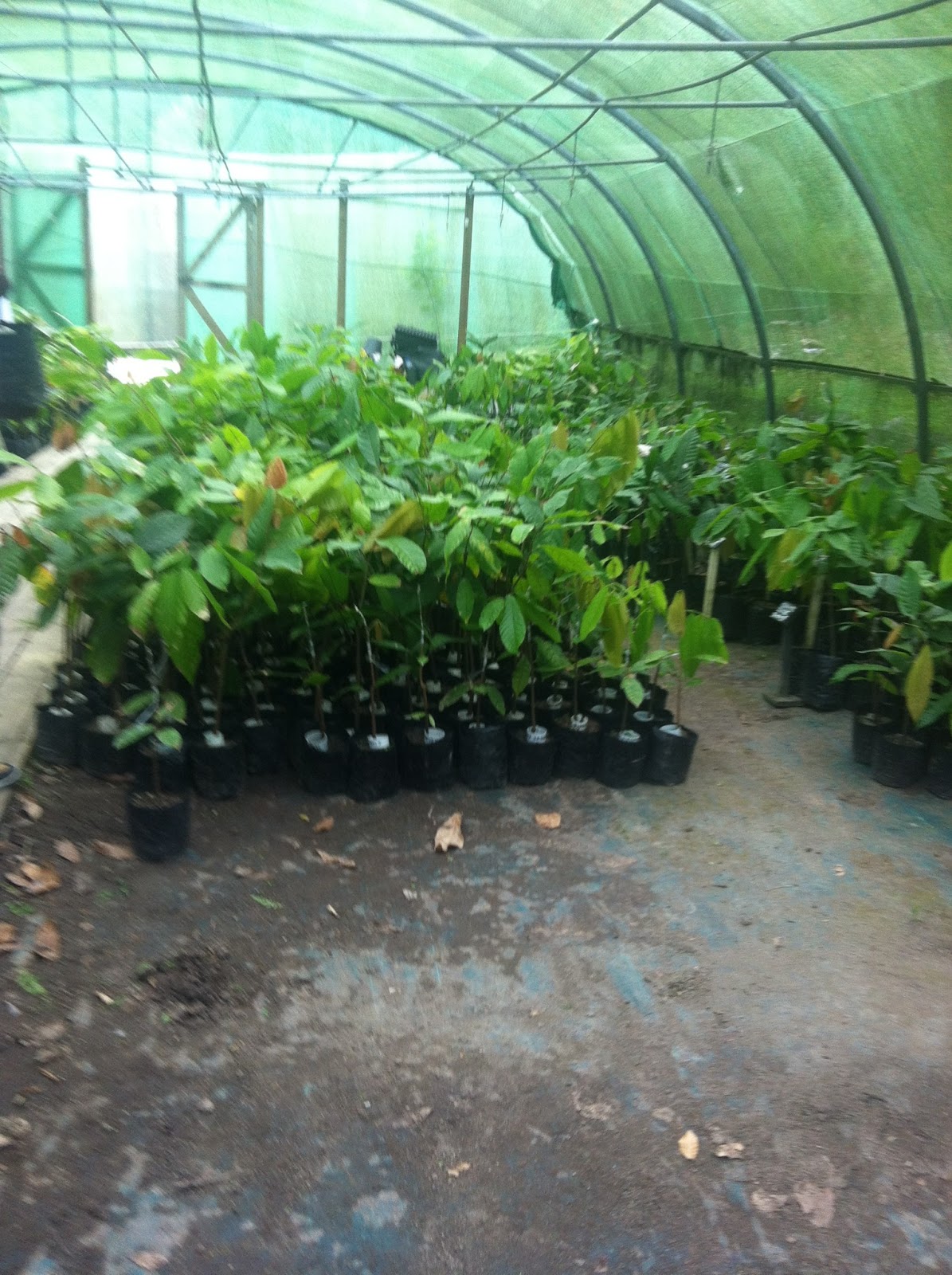
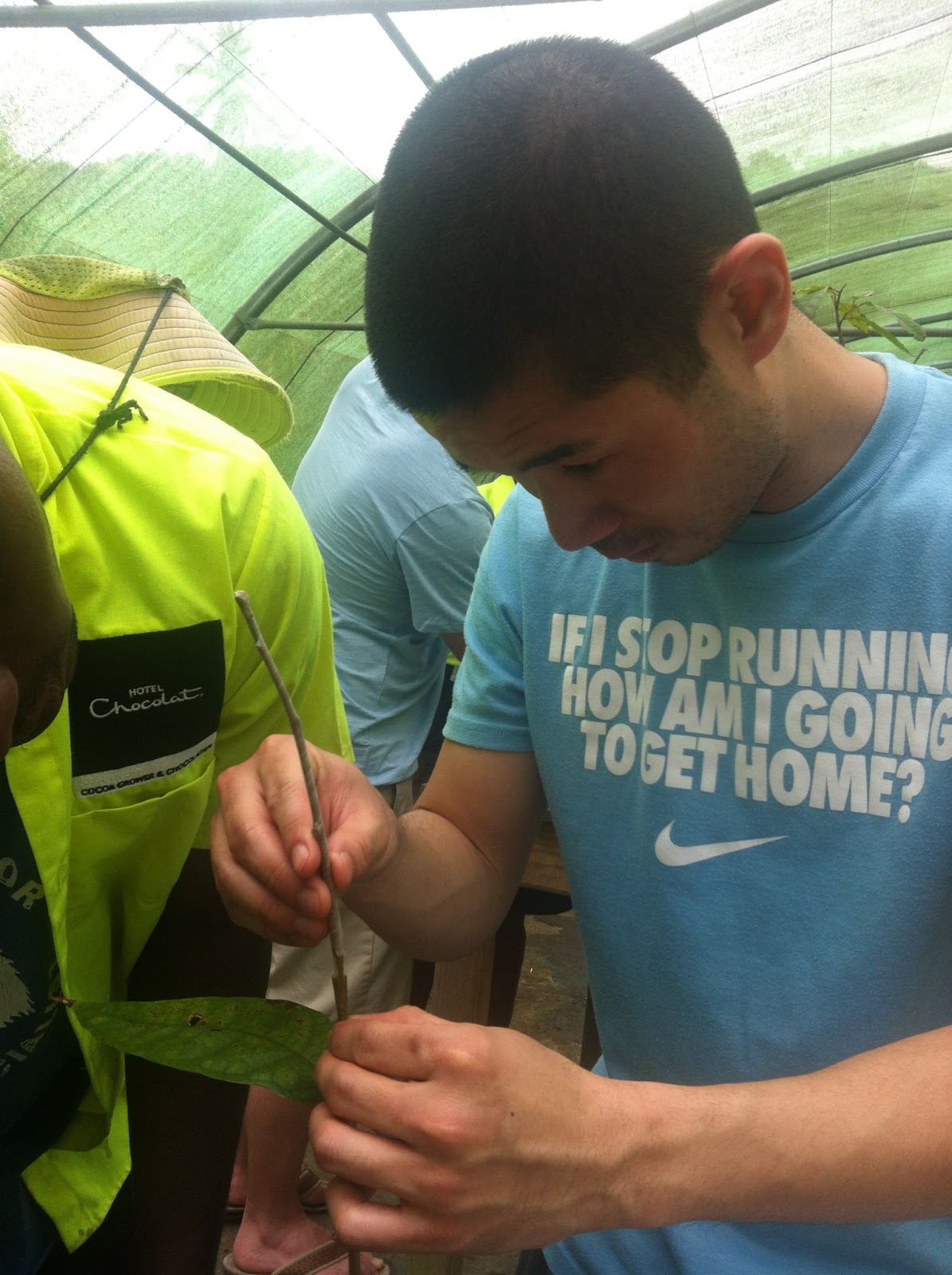
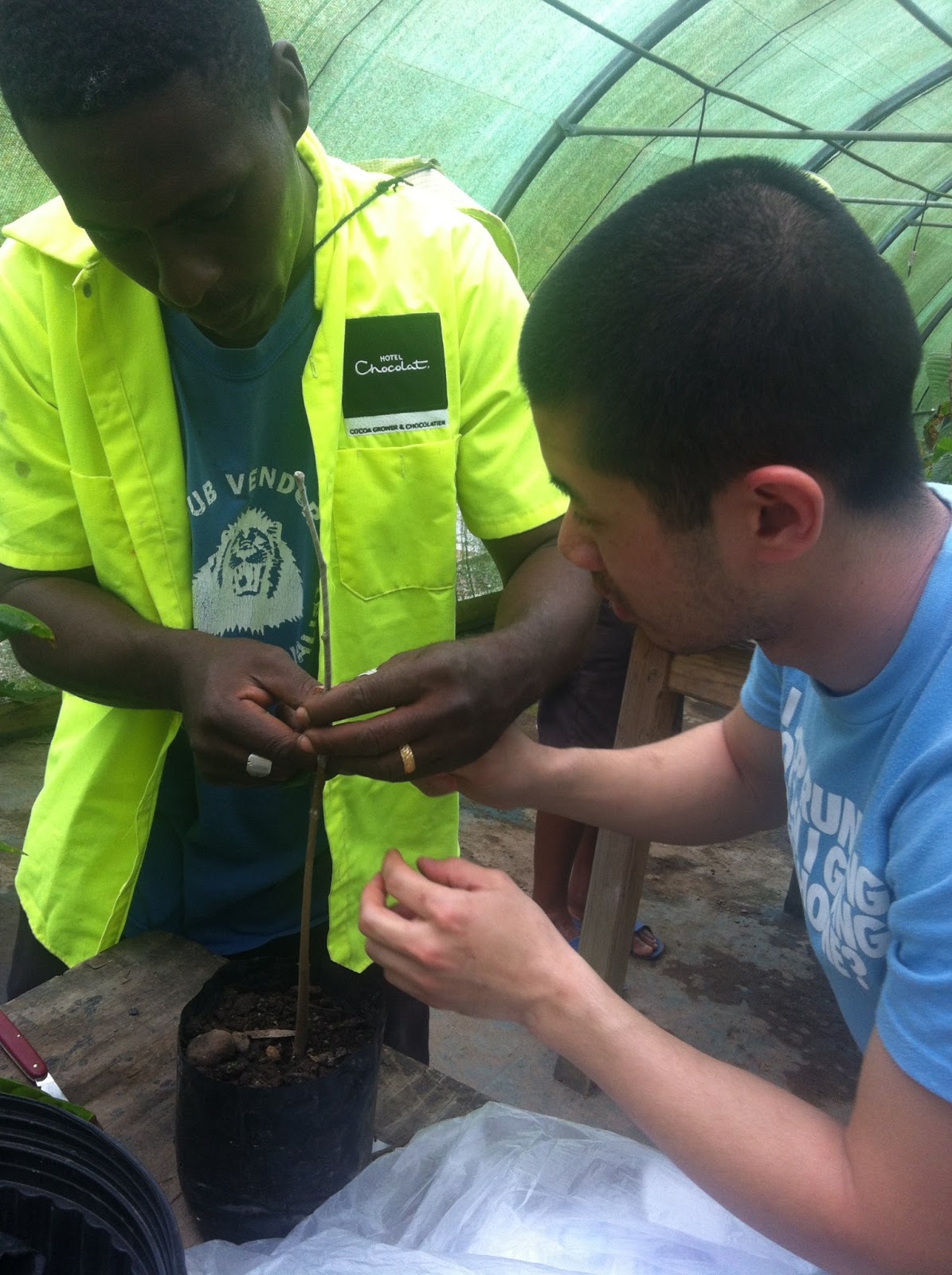
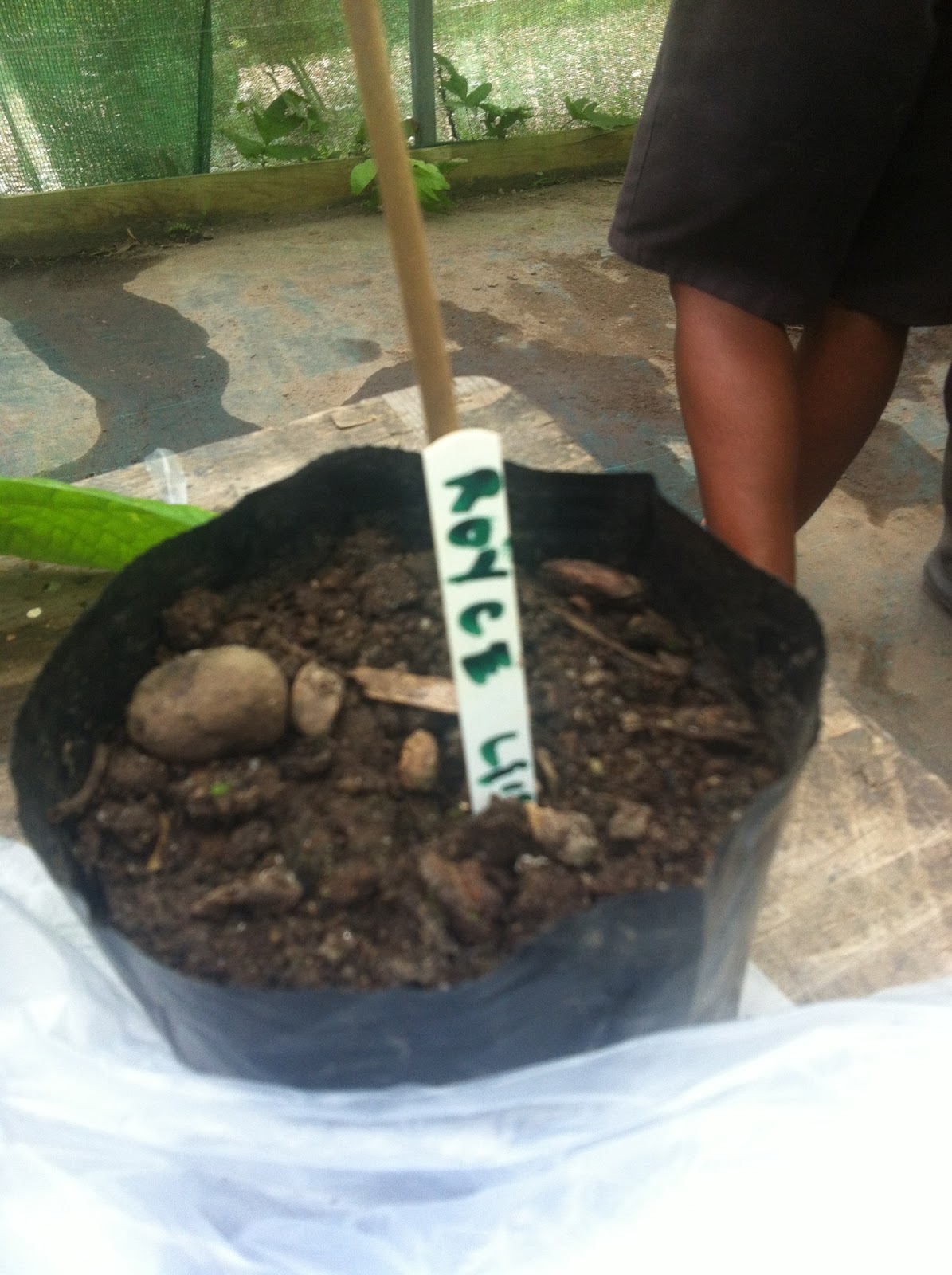
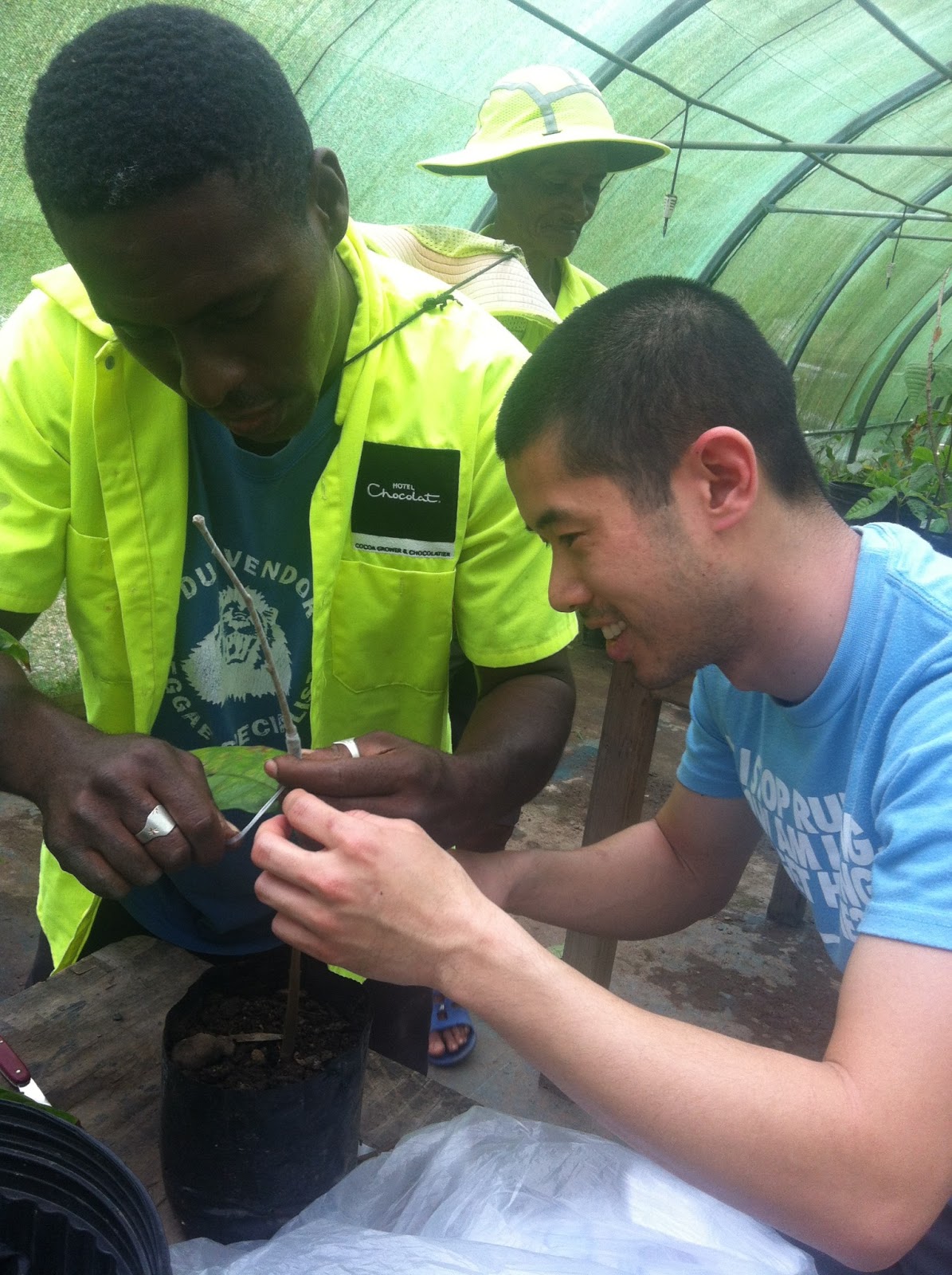
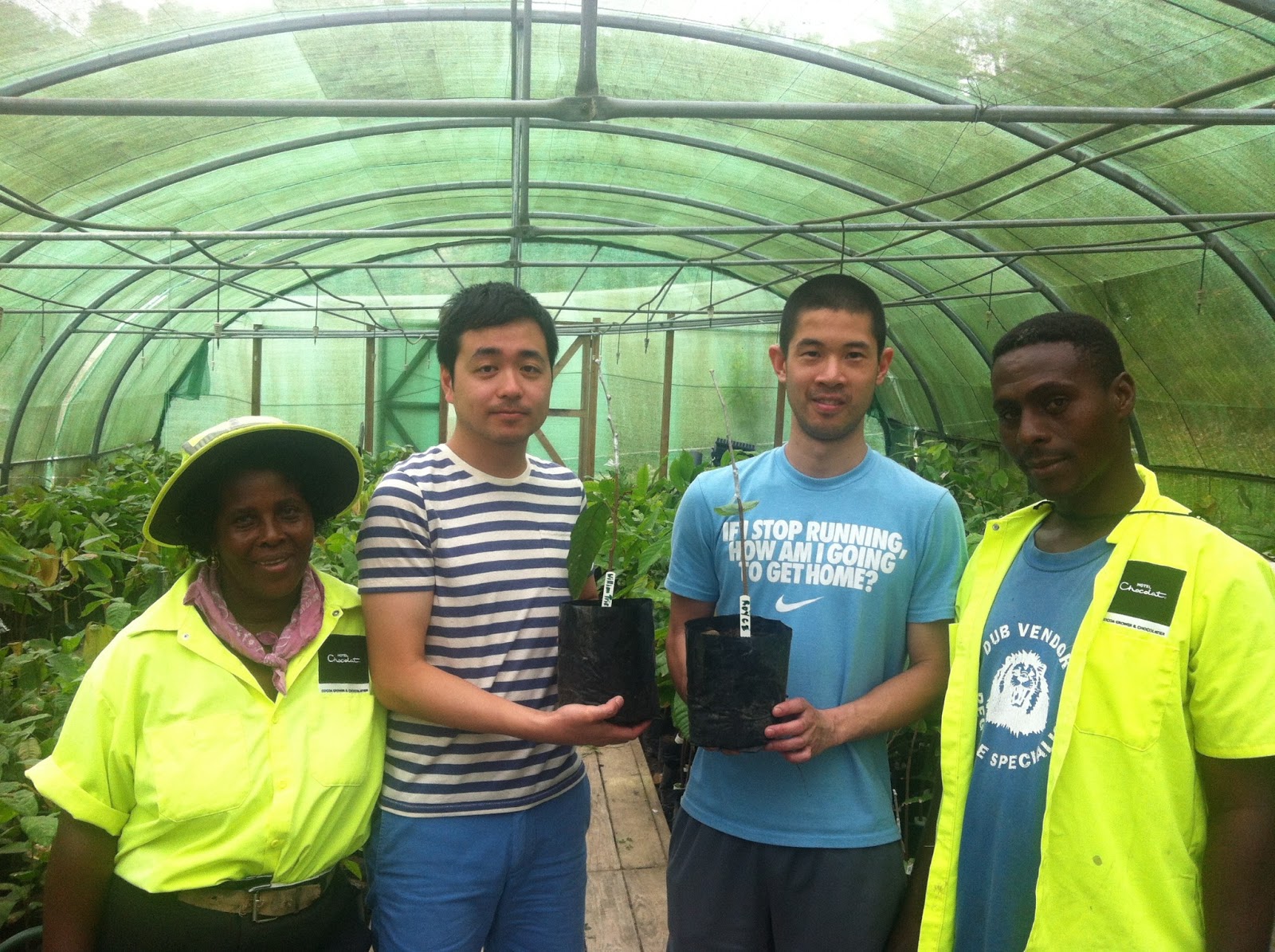
In the seedling nursery, we grafted a cacao plant to be planted in just a few short months and harvested within 2 years.

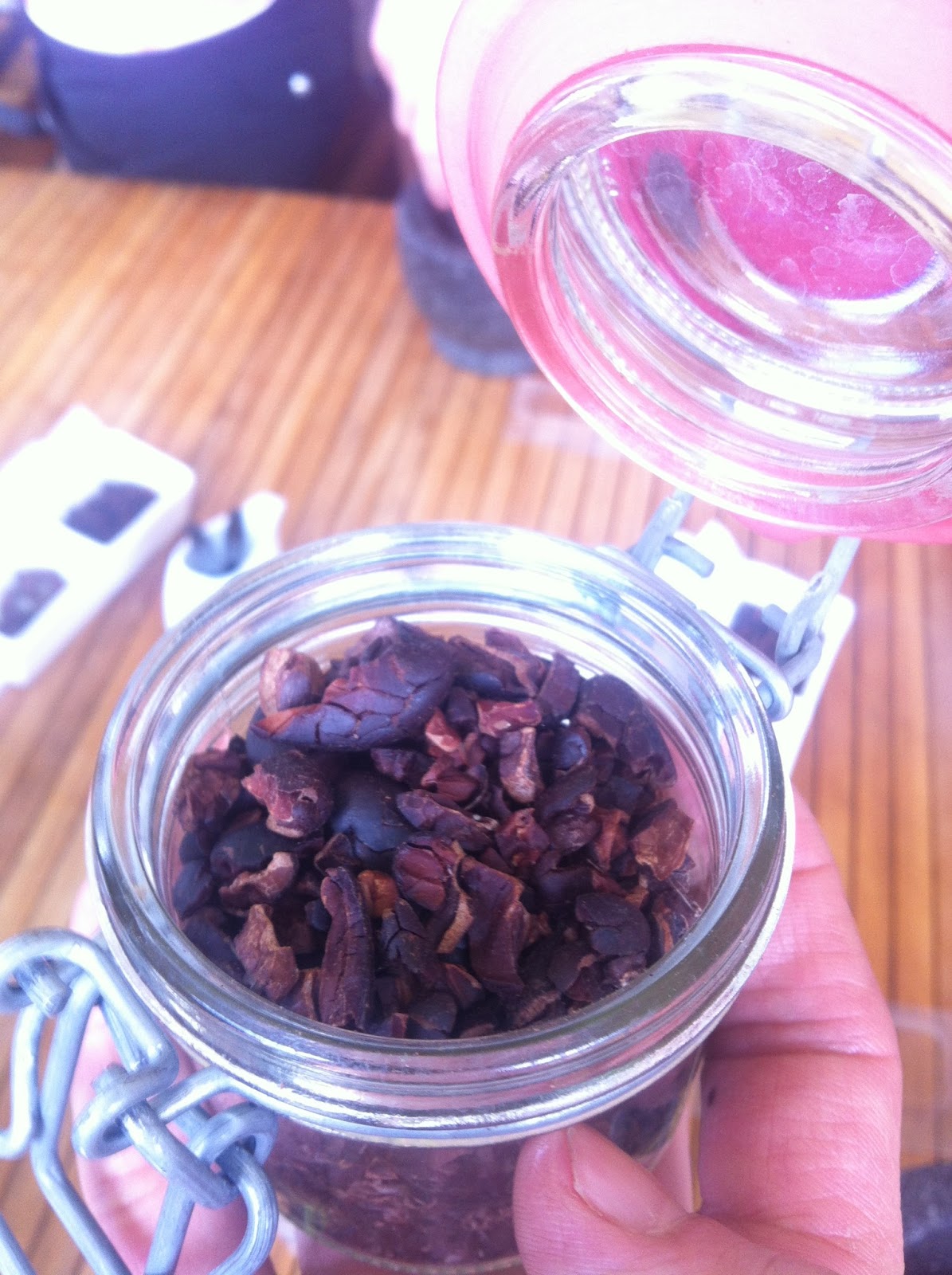
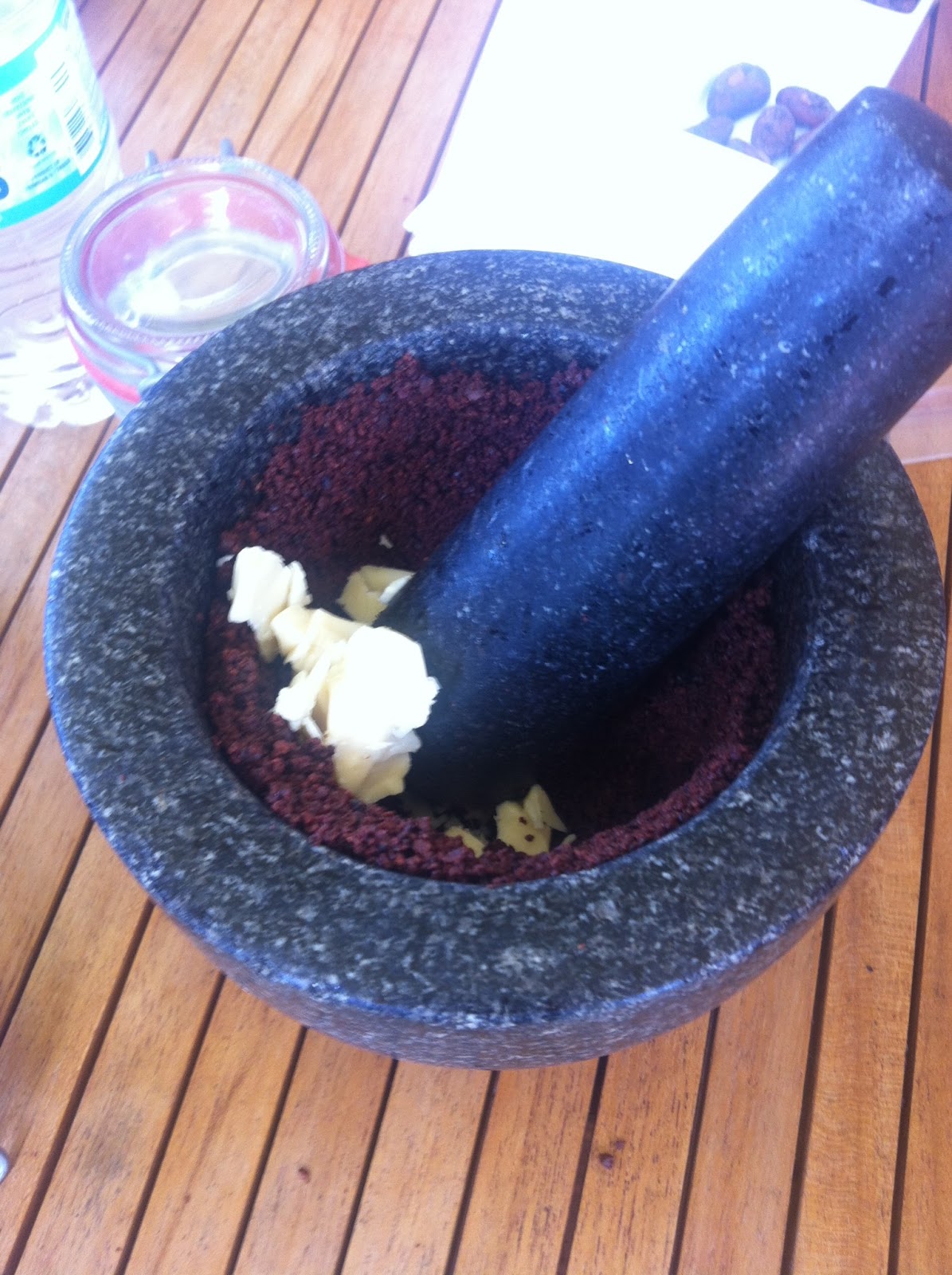
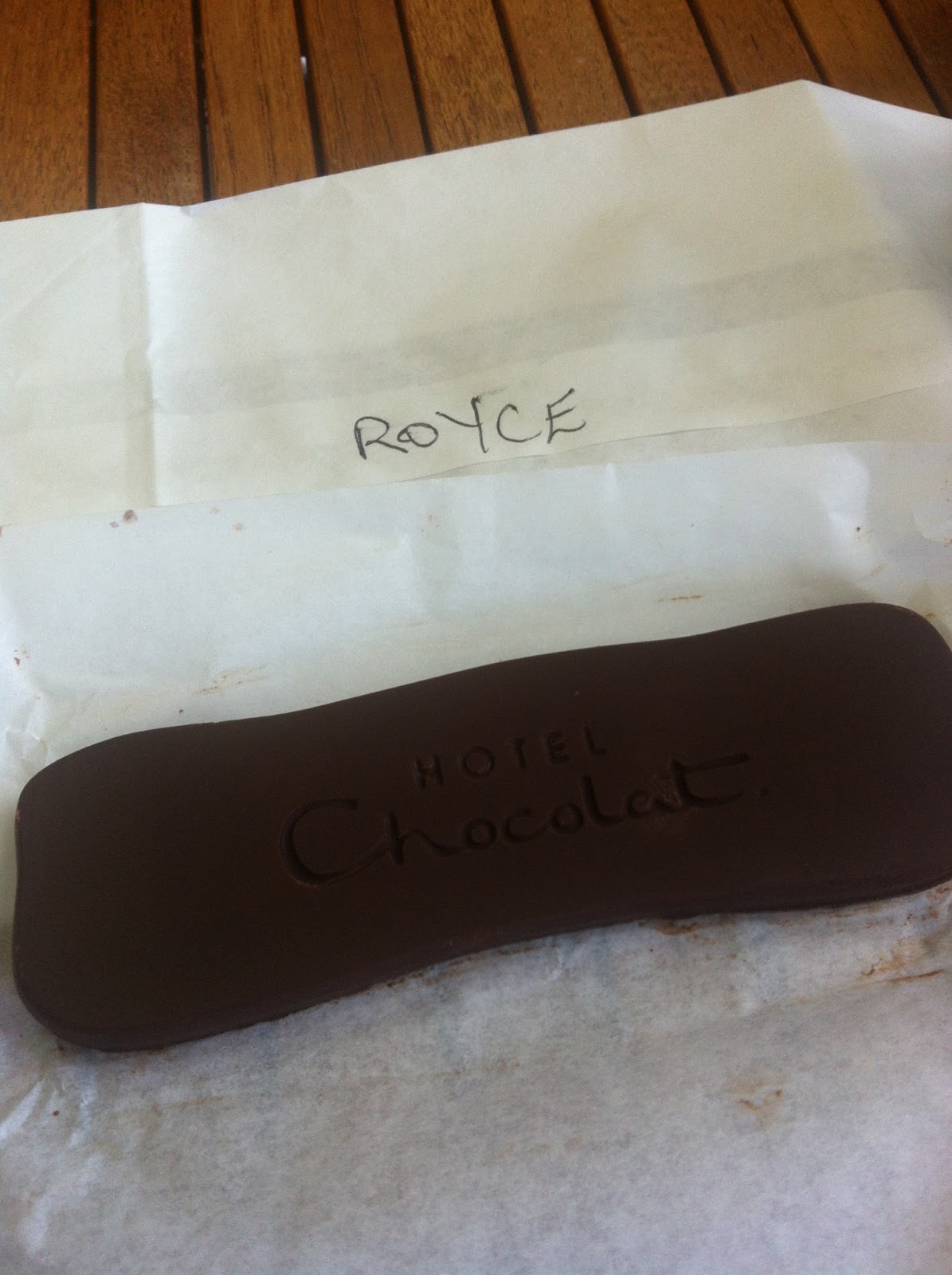
In the second part of the tour, I discovered the “bean to bar” experience by creating a chocolate bar with a pestle and mortar. The pestle and mortar was heated in the oven, the cacao nibs were first added to the pestle and mortar. Using a circular motion, you grind the nibs into a fine powder, then you add cocoa butter to the existing mixture. When the cocoa butter is completely melted, you add sugar and continue to grind until the mixture feels smooth between your fingers. The entire process to make a chocolate bar by hand took almost an hour.