Pain de mie

IMG-20191205-WA0012

As part of our nutrition club at school, the students often come for a snack whenever they are hungry. The simplest thing for them to do is to grab a bagel, toast it and put some spreadable cream cheese on it, (trust me they tell me when it’s not the spreadable kind). We haven’t managed to get a proper bagel recipe yet, that’s probably our next project. But in the meantime, we have managed to standardize a pain de mie recipe  that’s easy to make in our 74 minute time frame. It takes an extra day or two, but that’s OK. For Ms. Brignull’s class, they even used this recipe for a fundraiser where the students made the bread into grilled cheese sandwiches to sell with soup and one-of-a-kind bowls produced by Ms. Levay’s class.

Read More
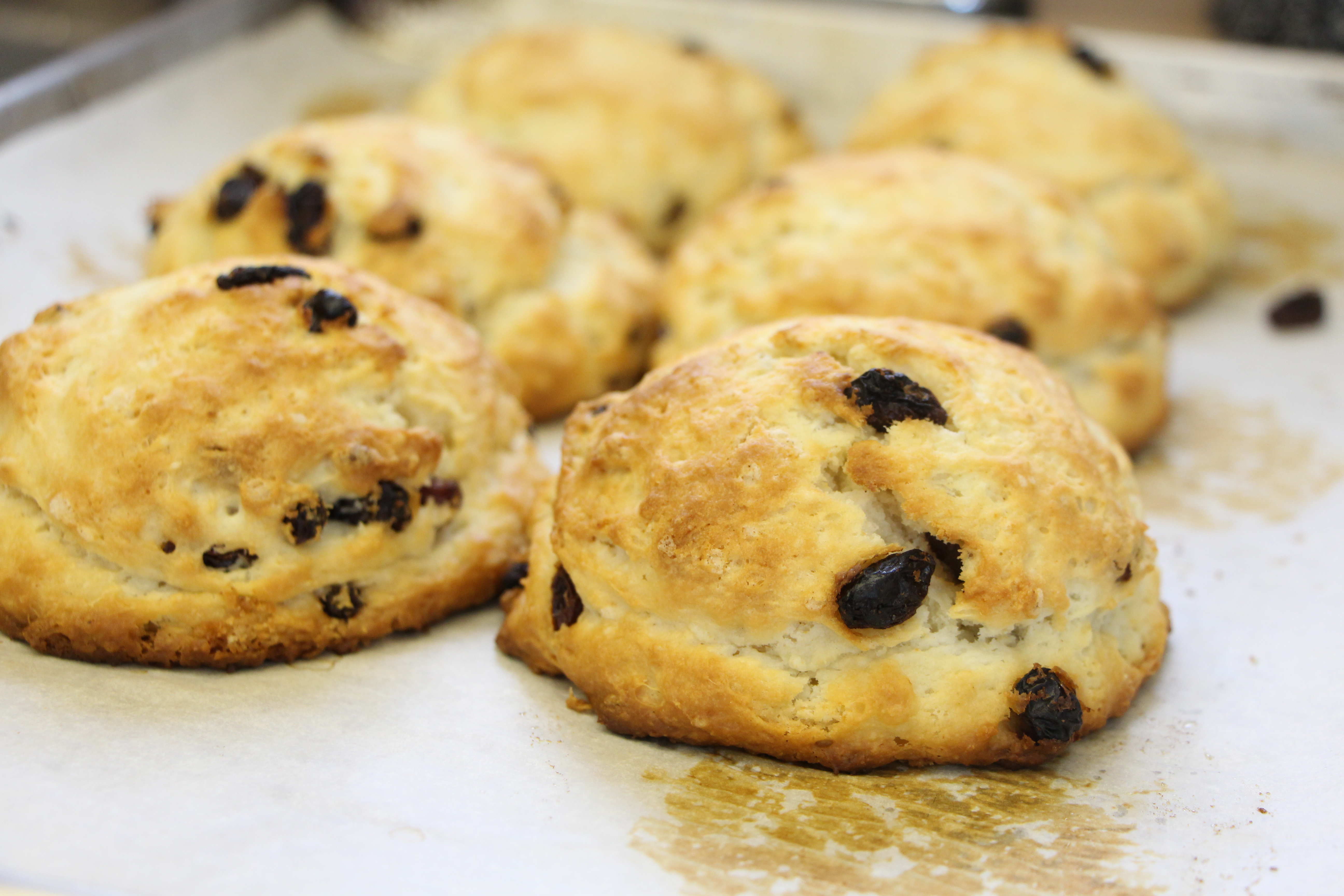
English-Style Scones (Scoopable)

IMG_0197

At school we often have to prepare breakfast, catering for teachers when they come for professional learning (PL). My students and I try our best to have a spread of freshly baked items along with fruits, yogurt, and coffee (of course!) upon their arrival. The baked goods include muffins, cookies, and Costco croissants that usually involve an embarrassing confession when someone asks if they was made in-house. Croissants made in-house? That’s the dream! But until we can afford a table-top sheeter, we will be working on madeleines, financiers, scones, and other items that are a little more practical to make in-house.

Read More

Ciabatta with poolish (80% hydration)

Ciabatta is a lean dough that is made with a poolish and something called the double-hydration method. This method involves adding water at two stages during gluten development. This is done to help incorporate the water of high hydration doughs.

Read More

Focaccia (93% hydration)

Focaccia is one of my favourite breads to make. It has a super high hydration (93% in this case), but because it’s baked in a pan it doesn’t require any bread shaping skills. The possibilities for toppings are limitless, and it’s pretty good plain as well. Personally, I like baking focaccia in a lasagna pan, because it’s smaller than a sheet tray and has higher sides so the resulting loaf is dramatically thick. Eat it on its own, or even slice it lengthwise for sandwiches. You can’t go wrong!

Read More

Bread Making Process

In the last few posts, I’ve been trying to cover some of the foundational topics of bread making. Today, I want to take a step back and talk about the steps involved in the overall process. My hope is that this will provide a general framework so that you know what to expect in a recipe, and even maybe start thinking about coming up with your own. Peter Reinhart says that the art of bread making involves 12 steps, I will try to give a brief description of each below:

Read More